

| Start | End | Event in the Jake Jabs Conference Center, CU Denver Business School |
| 7:30 am | 8:30 am | Registration |
| 8:30 am | 8:35 am | Welcome |
| 8:35 am | 8:45 am | Opening Remark by CU Denver Provost and Executive Vice Chancellor for Academic Affairs, Professor Karen Marrongelle |
| 8:45 am | 9:45 am | Keynote: Degrees of Disruption - How AI is Reshaping How We Learn, Work, and Lead |
| 9:45 am | 10:00 am | Poster Session and Snack Break |
| 10:00 am | 11:00 am | Presentation Session : Foundation of AI |
| 11:00 am | 12:00 pm | Tutorial: A Short Introduction to Cooperative Multi-Agent Reinforcement Learning |
| 12:00 pm | 1:00 pm | Poster Session and Lunch Break |
| 1:00 pm | 2:00 pm | Panel: Harnessing Artificial Intelligence to Create Public Good |
| 2:00 pm | 3:00 pm | Presentation Session : AI Applications |
| 3:00 pm | 3:15 pm | Poster Session and Snack Break |
| 3:15 pm | 3:45 pm | Student Competition: LYNX HACK - winner presentations |
| 3:45 pm | 4:45 pm | Presentation Session : AI in Education |
| 4:45 pm | 5:00 pm | Closing Remarks |
- Abstract Submission Deadline: March 20th, 2026
- Notification of Acceptance: March 30th, 2026
- Last day to register to attend: April 3rd, 2026
- Presentation Date: April 10th, 2026 at Jake Jabs Event Center, University of Colorado Denver’s Business School
Jake Jabs Center, CU Denver Business School
1475 Lawrence Street, Denver CO
To submit a proposal please register!!!
The abstracts submitted to present at the symposium will be reviewed and considered for oral presentation and/or poster presentation. The presenters whose abstracts are selected for oral presentation during the main conference will be notified by March 30th, 2026 . Other presenters will be invited to present their abstract as poster during the poster session, assuming relevance and appropriateness of the topic.
In the registration form, presentations can be submitted under three main tracks which are:
Our goal is to foster a diverse and comprehensive dialogue around the transformative power of data science and AI. We encourage submissions across these categories, but we also welcome quantitative works in other disciplines and applications that are not listed here.
Research on Data Science and AI Core Foundations and Methods
Application of Data Science and AI
Data Science and AI Education
To submit a proposal please register!!!
- Abstract Submission Deadline: March 20th, 2026
- Notification of Acceptance: March 30th, 2026
- Last day to register to attend: April 7rd, 2026
- Event: April 10th, 2026
Jake Jabs Center, CU Denver Business School
1475 Lawrence Street, Denver CO
General Chairs
Dr. Farnoush Banaei-Kashani — [email protected]
Dr. Julien Langou — [email protected]
Dr. Meysam Rabiee — [email protected]
Local Co-Chair
Dr. Meysam Rabiee — [email protected]
Dr. Julien Langou — [email protected]
Treasurer Chair
Dr. Julien Langou — [email protected]
Workshop Chair
Dr. Farnoush Banaei-Kashani — [email protected]
Tutorial Chair
Dr. Tulay Flamand — [email protected]
Panel Chair
Dr. José (Pepe) Sánchez — [email protected]
Dr. Alejandra Medina — [email protected]
Sponsor Chairs
Dr. Meysam Rabiee — [email protected]
Dr. Carlos Martinez Mori — [email protected]
Elyas Larfi — [email protected]
Publicity Chairs
Dr. Tulay Flamand — [email protected]
Dr. Meysam Rabiee — [email protected]
Dr. Geeta Verma — [email protected]
Dr. Priyanka Desouza — [email protected]
Student Competition and Activities Chairs
Elyas Larfi — [email protected]
Registration Chairs
Elyas Larfi — [email protected]
Qijian Ma — [email protected]
Webmasters
Elyas Larfi — [email protected]
Qijian Ma — [email protected]
We are very thankful to our sponsors! The symposium would not have been possible without their generous contributions. Thanks for contributing to supporting the CU Denver data science & AI community!
Our sponsors are:
CU Denver College of Engineering, Computing and Design
CU Denver College of Liberal Arts Sciences
CU Denver Research Development Office
When: Friday, April 10th 2026
Where: Jake Jabs Center, CU Denver Business School
From Subtle Shifts to Transformative Change: AI’s Impact on How We Learn, Live, Work, and Lead

Suma Nallapati
Chief AI and Information Officer (CAIO)
City and County of Denver
When: Friday, April 10th 2026
Where: Jake Jabs Center, CU Denver Business School
Artificial Intelligence (AI) has the potential to significantly advance the public good by improving services, promoting equity, and supporting sustainable communities. This panel brings together leaders from city government, nonprofits, and the private sector to examine how AI is being applied to enhance planning, resource allocation, service delivery, and support for vulnerable populations.
Panelists will discuss real-world applications, ethical considerations such as transparency and accountability, and the importance of community engagement. Through cross-sector perspectives, the discussion will highlight practical strategies and partnerships that can harness AI as a driver of inclusive innovation and positive social impact.
Panelists:
 Robert Bruns — Applications Development & AI Director, City and County of Denver
Robert, a senior technology leader at Denver, specializes in Application Development and AI. Experienced in innovating enterprise systems and leading strategic tech projects, he's known for transforming teams and delivering data-driven solutions to complex challenges. He pioneers AI efforts to improve data governance, analytics, and automation across city operations. With a career spanning public and private sectors, including notable work at Agilent Technologies, Robert is passionate about using emerging tech to build resilient, efficient, and secure digital ecosystems.
 Cristina Sloan — Chief Development Officer, Denver Zoo Conservation Alliance
Cristina has a strong record of fundraising success at various nonprofits, educational, and cultural groups in Denver. As the Interim Chief Development Officer at Denver Zoo Conservation Alliance, she helped raise more than double the funds. She previously held leadership roles at the University of Colorado - Denver and Emily Griffith Foundation. Passionate about problem-solving and motivating teams, Cristina exceeds goals and builds donor relationships. Her teaching background influences her approach to inspiring curiosity and engagement in both students and donors.
 Dan Connors — Professor Emeritus, University of Colorado; AI Director of Developer Relations, NVIDIA
Dan Connors brings a career-long focus on using computing to solve real-world problems that matter to communities. He is Professor Emeritus at the University of Colorado, where he taught computer engineering for 23 years. Today, he serves as AI Director of Developer Relations at NVIDIA, supporting work across supply chain, smart cities, and the public sector. His career has included startup work in smart-city computer vision, along with ongoing interests in satellite vision for agriculture, urban data science, and transportation. His interests remain focused on education. He serves on the St. Vrain Valley Schools Innovation Center AI Board, which connects students, educators, industry, and community partners to work on real-world problems with emerging technologies and experiential learning.
Session Chairs:
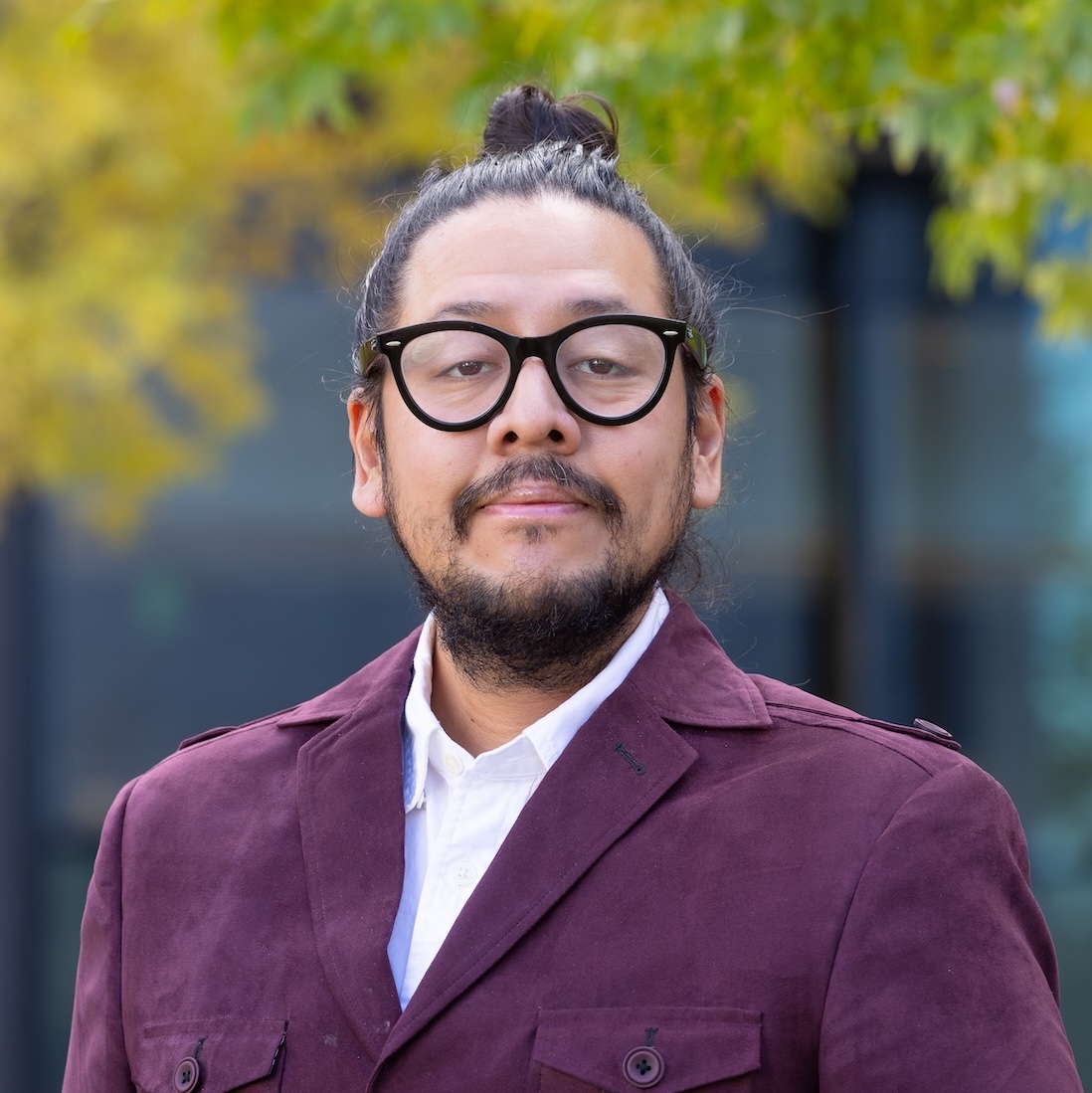 Dr. José Sánchez — Assistant Professor, University of Colorado Denver School of Public Affairs
 Dr. Alejandra Medina — Assistant Professor, University of Colorado Denver School of Public Affairs
When: Friday, April 10th 2026
Where: Jake Jabs Center, CU Denver Business School
Time: 11:00 AM - 12:00 PM
Multi-agent reinforcement learning (MARL) has grown rapidly in recent years. While numerous approaches have been developed, they can be broadly categorized into three main types: Centralized Training and Execution (CTE), Centralized Training with Decentralized Execution (CTDE), and Decentralized Training and Execution (DTE).
CTE methods assume centralization during both training and execution (e.g., fast, free, and perfect communication), giving agents access to the most information at runtime. CTDE methods are the most common approach, leveraging centralized information during training while allowing agents to execute using only locally available information. DTE methods make the fewest assumptions and are often simpler to implement.
This talk provides an overview of these MARL approaches, highlights state-of-the-art methods, clarifies common misconceptions, and explores relationships between techniques. The focus is on cooperative settings, though many concepts extend to competitive and mixed environments.
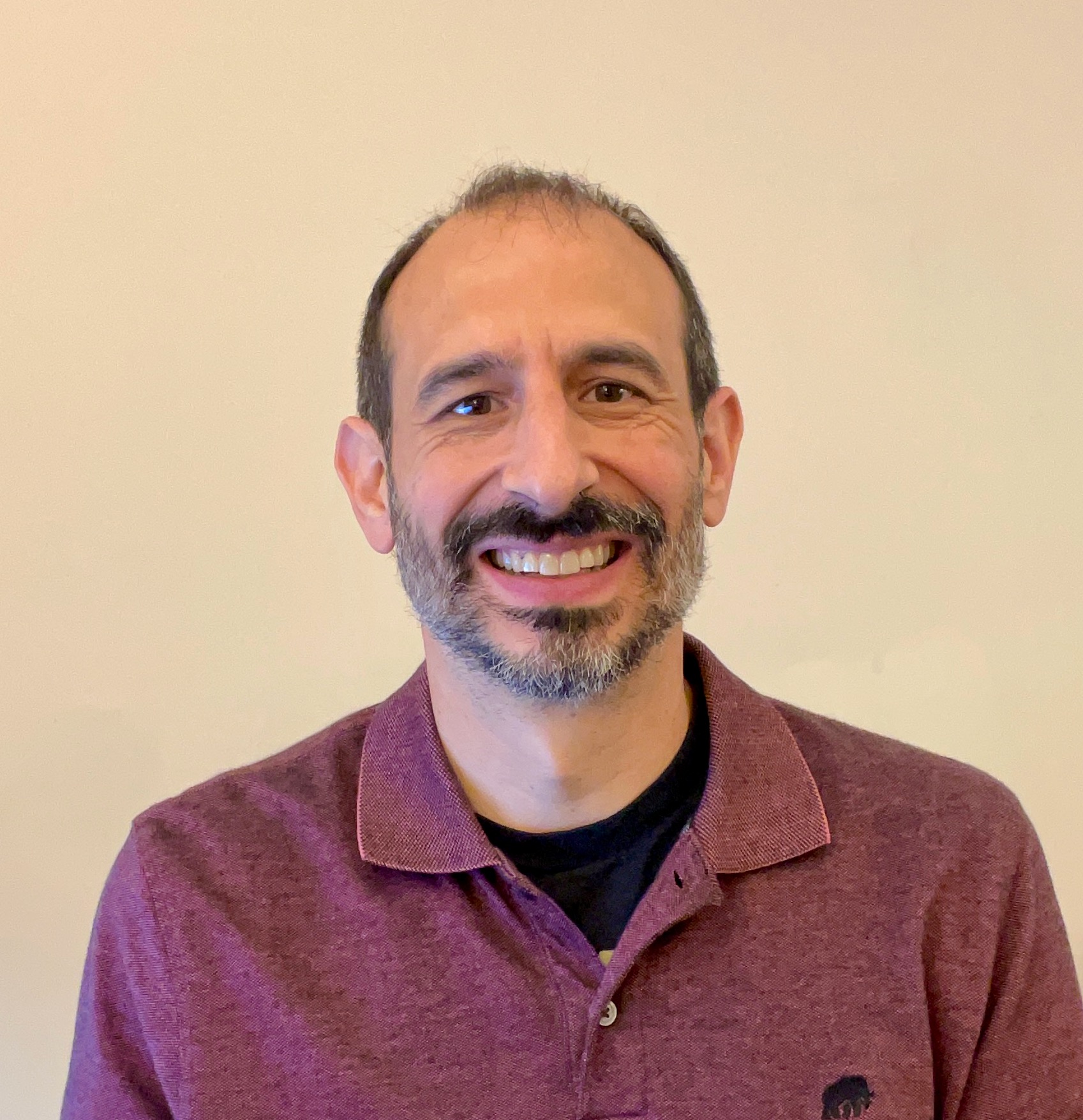
Associate Professor, Computer Science
Northeastern University
Dr. Christopher Amato is an Associate Professor at Northeastern University where he leads the Lab for Learning and Planning in Robotics. He has published many papers in leading artificial intelligence, machine learning, and robotics conferences, including winning a Best Paper Prize at AAMAS 2014 and receiving Best Paper nominations at RSS 2015, AAAI 2019, AAMAS 2021, and MRS 2021.
He has also co-organized several tutorials on multi-agent coordination and co-authored a popular book and several surveys on the subject. His work has received multiple recognitions including Amazon Research Awards and an NSF CAREER Award. His research focuses on reinforcement learning in partially observable environments and multi-agent or multi-robot systems.
When: The hackathon will run from Monday, March 30 through Friday, April 3.
Session Chair: Elyas Larfi
Official Site: https://hackathon.cudenver-ai.com/
Hackathon challenges participants to design and build agentic AI systems, AI that goes beyond chat and actively operates within real workflows. Teams will create AI-powered systems that can reason, use tools, make decisions, and take real-world actions such as sending messages, updating documents, triggering APIs, or managing tasks.
Unlike traditional AI competitions focused solely on models, this hackathon emphasizes systems thinking: reliability, safety, automation depth, and real usability. Projects must include clear inputs, meaningful external actions, and at least one reliability or safety feature such as human-in-the-loop approval, validation, or error handling.
The event is designed to be accessible to both technical and non-technical participants. Tools like n8n are recommended for workflow orchestration due to their visual, low-code interface, but teams are free to integrate any modern AI stack including LLM APIs, agent frameworks, backend services, frontends, and vector databases.
Submissions are evaluated using a hybrid judging framework that combines human review with objective benchmarks, rewarding not just flashy demos but robust, reproducible, and well-designed agentic systems. Workshops, starter templates, and example workflows will be provided to help teams get started quickly.
If you believe AI should operate, not just respond, this hackathon is for you.
| Title | Presenter | School/Department |
|---|---|---|
| Closing the Gap: Efficient Algorithms for Discrete Wasserstein Barycenters | Jiaqi Wang | Georgia Institute of Technology
H. Milton Stewart School of Industrial and Systems Engineering |
| Adaptive Leverage Causal Inference: Uncertainty-Aware Distillation for Integrating Gaussian Processes with Double Machine Learning | Felix Junior Appiah Kubi | University of Northern Colorado
Applied Statistics and Research Methods |
| A Statistically Grounded Hybrid AI Framework for Survival Prediction in Healthcare Data | Sunday O. Aghamie | University of Northern Colorado
Applied Statistics & Research Methods |
| Optimizing k-Removal AUC for Urban Infrastructure Networks | Himadri Sen Gupta | Colorado State University Pueblo
School of Engineering |
| Activation Outliers in Transformer Quantization: Statistical Analysis and Deployment Tradeoffs | Pranav Kaliaperumal | University of Colorado Denver College of Engineering, Design and Computing |
| Model-based Clustering of Music Pieces | Yingying Zhang | Western Michigan University
Department of Statistics |
| Title | Presenter | School/Department |
|---|---|---|
| Limitations of Watermarking AI-Generated Speech using AudioSeal | Phillip DeLeon | University of Colorado Denver Research Development Office |
| Segmentation-Free Analysis of Xenium-Scale Spatial Transcriptomics Reveals Anatomical and Glial Signatures in Traumatic Brain Injury | Yaseer Sabir | University of Colorado Denver Computer Science & Engineering College of Engineering, Design and Computing |
| AI-Powered Tactile Glove for Human Recognition in Low-Visibility Fire Environments | Feng Jiang | Metropolitan State University of Denver
Computer Science |
| POKY: AI-Assisted Biomolecular NMR Platform | Woonghee Lee | University of Colorado Denver Chemistry College of Liberal Arts and Sciences |
| Conversational AI for Community Sustainability: The Colorado Sustainability Hub | Daniel Pittman | Metropolitan State University of Denver
Computer Science |
| Title | Presenters | School/Department |
|---|---|---|
| From AI Tool to Co-Instructor: Designing Co-Intelligence Learning in Higher Education | Richard Ashmore, Erin Avery | University of Colorado Denver Geography and Environmental Sciences College of Liberal Arts and Sciences |
| From Analysis to Action: Dual Uses of Generative AI in Learning Analytics and Student Support | Steve Geinitz | Metropolitan State University of Denver
Computer Science |
| From Answer Engine to Pedagogical Partner: Designing Custom LLM Tutors for Student Success | Adam Spiegler | University of Colorado Denver Mathematical and Statistical Sciences College of Liberal Arts and Sciences
|
| Leveraging Generative AI to Enhance Learning: Examples and Lessons from the Classroom | Robyn Mobbs | University of Colorado Denver School of Public Affairs |
| Student Perceptions of AI Usage in Their Work in Higher Education | Annika Mosier, Paul Le | University of Colorado Denver Integrative Biology College of Liberal Arts and Sciences |
| Generative AI as a Cognitive Scaffold: Shifting Student Data Questions from Descriptive to Analytical | Ranjidha Rajan | Metropolitan State University of Denver
Computer Sciences |
| Title | Presenter | School/Department |
|---|---|---|
| Autonomous Teamwork at Scale: Distributed Algorithms for Real Mission Constraints | Joseph Kenrick | Colorado School of Mines
Operations Research |
| Verifier-Guided Reinforcement Learning for GSM8K Math Reasoning | Michelle Lin | Thomas Jefferson High School for Science and Technology
|
| Route-Based Predictive Energy Management for Heavy-Duty Hydrogen Trucks: A TCN–MPC Framework with Digital Elevation Enrichment | Feven Mekonen | University Of Colorado Denver College of Engineering, Design and Computing |
| An Exposition on the Importance of Anomaly Detection in AI | Jacob Johns | University Of Colorado Denver Mathematical & Statistical Sciences College of Liberal Arts and Sciences |
| Artificial Intelligence and Machine Learning-Based Early Detection of TB Co-Infection in HIV Patients | Muhammad Babar | University Of Colorado Denver
College of Engineering, Design and Computing |
| Retraining LLMs to Think Like a Chief Design Officer: Strategic, Brand-Aligned Web Design Beyond Generic UI Generation | Rishikesh Yadav | Caldwell University
Computer Science |
| Fairness in the Fight Against Health Misinformation: An Ethical AI Lens on Detection Systems Across Social Networks | Jigna Chaudhary | University Of Colorado Denver
Business School |
| AI-Augmented Systems for Cyber Resilience in Large-Scale IT Environments | Malgorzata Schwab | University Of Colorado Denver
College of Engineering, Design and Computing |
| Deep Learning for Urban Heat Island Classification Using Landsat-8 Thermal Imagery | Akanksha Gutal | University Of Colorado Denver
College of Engineering, Design and Computing |
| Investigating Rotational Dynamics in Motor Control: The Interplay of Sensory Feedback and Neural Intrinsic Connectivity | Elyas Larfi | University Of Colorado Denver
College of Engineering, Design and Computing |
| Leveraging MPC's and Smart Controls for Water Heater Efficiency | Janelle Domantay | Colorado School of Mines
Mechanical Engineering |
| HANA: A Novel Tool to Integrate Computer-Structured Models with NMR Data for Homodimer Structure Determination | Karen Pham | University Of Colorado Denver
Chemistry |
| ANSERing the Mysteries of Herbal Medicine | Abigail Chiu | University Of Colorado Denver
Chemistry |
| Kittn: a hybrid wavelet and AI-based tool for denoising NMR spectra | Qingxuan Fei | University Of Colorado Denver Chemistry College of Liberal Arts and Sciences |
| FASTLANE: Reinforcement Learning in Autonomous Cars | Manali Raut, Ronald Yu | University Of Colorado Denver
College of Engineering, Design and Computing |
| Guiding Principles for Secure and Scalable AI Adoption | Debajit Kumar Sandilya | Atlassian Inc. Atlassian- Central AI |
| Data Driven Decision Making in Nonprofits Leveraging AI for Social Impact | Chinni Krishna Abburi | Communities Foundation of Texas Information Technology |
| Agentic AI used to prepare documents for AI Search tools | Clay Creighton | FileForge Inc. |
| Faculty Identity and the Rhetoric of AI Disruption in Data Science Education | Soumia Bardhan | University Of Colorado Denver
Communication College of Liberal Arts and Sciences |
| Data Science Degree Programs at CU Denver | Joshua French | University Of Colorado Denver
Communication College of Liberal Arts and Sciences
|
| Segmentation-Free Analysis of Xenium-Scale Spatial Transcriptomics Reveals Anatomical and Glial Signatures in Traumatic Brain Injury | Yaseer Sabir | University of Colorado Denver
Computer Science & Engineering College of Engineering, Design and Computing |